Man-to-Man and Zone Defence Solve Different Problems
Man-to-man vs zone defence comes down to who protects each threat: learn how marking and guarding space shape a basketball possession.
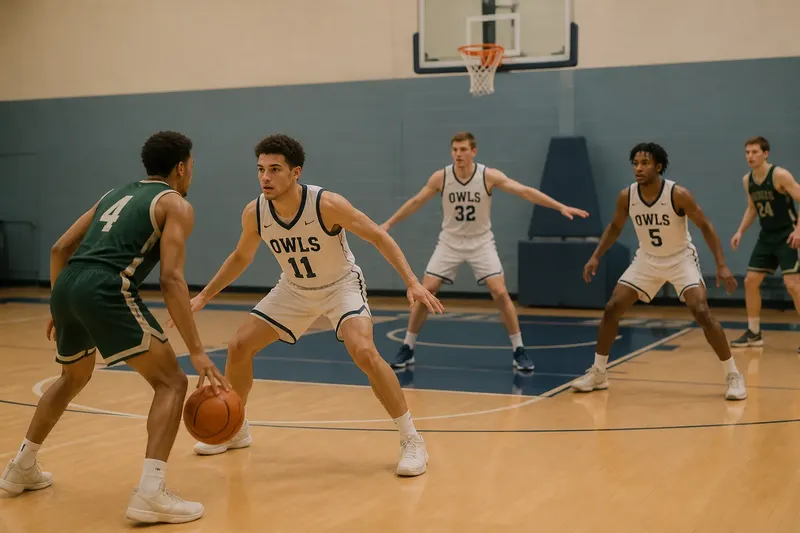
The guard catches the basketball near the sideline, and the defense has a choice: follow each attacker or hold its shape across the floor. Man-to-man vs zone defence is not a contest between effort and laziness; it is a choice about which problem the team wants to solve first.
Imagine a clearly hypothetical late-game possession. A fictional team, the Harbor Owls, is protecting a narrow lead against the fictional Cedar Comets. The Comets have a quick point guard, a reliable shooter on the wing, and a center who likes to work near the basket. The Owls must decide whether to track those players individually or defend the spaces they are likely to attack.
Man-to-man defence assigns a player to a player
In man-to-man defence, each defender takes primary responsibility for an opponent. The Owls’ point guard follows the Comets’ ball-handler. Another defender picks up the wing shooter, while a larger defender starts with the center. Assignments can change during screens and switches, but the basic question stays personal: whom are you guarding?
This approach can make it harder for a scorer to roam freely. A defender can stay close through a cut, contest a catch, and pressure the ball-handler as the play develops. It also gives the defense a clear starting map: identify the opponents, communicate assignments, and react to movement.
The map can get messy. A screen may block the defender’s route, and two attackers can force a split-second choice: chase the original player or switch to the screener. If the defenders hesitate, the Comets could gain an open lane or a clean shot. If they switch, a smaller defender may end up guarding the center.
Zone defence assigns defenders to areas
In zone defence, each Owl guards a region rather than following one Comet everywhere. A two-three zone, for instance, places two defenders nearer the top of the formation and three closer to the baseline. The exact shape can shift, but the assignment is spatial: protect the area, then challenge attackers who enter it.
That shape may help the Owls keep bodies near the basket and discourage direct drives. A player cutting across the floor does not automatically pull one defender out of position; nearby defenders can pass responsibility along as the cutter enters a new area. The defense is less tied to a single opponent’s route.
But a zone does not mean standing still. The defenders have to slide together, close space around the ball, and recognize who should challenge a pass or shot. If the Comets move the ball quickly, an exposed gap may open before the nearest Owl can recover. A shooter left free at the perimeter can also punish a slow rotation.
The Owls choose the problem they can manage
At the start of the invented possession, the Comets spread out. Their point guard dribbles near the sideline while the wing shooter waits beyond the arc. The center stands high, ready to set a screen. The Owls begin in man-to-man. That lets the defender on the ball apply pressure while the others keep track of their assigned opponents.
The center sets the screen. The Owls’ ball defender goes over it, trying to stay with the guard, while the defender assigned to the center steps briefly toward the ball to slow the drive. The wing defender stays connected to the shooter. It is a compact response, but the guard turns the corner before the on-ball defender can catch up.
Now the Owls face a choice. Their center defender can keep stepping out, risking an opening near the basket, or recover to the center and leave the guard more room. The ball-handler pulls the defense toward the lane and passes to the wing. The shooter is covered, but the pass has made the Owls rotate across the floor.
On the next possession, the Owls switch to a zone. The point guard again attacks from the sideline, but the nearest defender contains the drive while a second Owl shades toward the lane. The center remains near the basket, protecting space the man-to-man defence had briefly left open. When the ball moves to the wing, the outside Owl closes out as the others shift behind.
The Comets do not get a clear path to the rim. They pass back out and reset. That is an observable result in this imagined sequence, not proof that zone is better: the zone has made the first drive less inviting, but the Comets still have room to move the ball and search for a shooting chance.
How do screens, shooters, and mismatches change the choice?
What does man-to-man do against a screen?
Defenders can chase over or under a screen, switch assignments, or use brief help from a nearby teammate. Each choice changes who contests the ball and who protects the screener, so teams need to agree on their response before the screen arrives.
Does a zone leave shooters open?
It can expose perimeter space if defenders rotate late or lose sight of a shooter. A well-organized zone can still challenge outside shots, but the defenders must close out without abandoning the areas behind them.
Which defence is better against a fast ball-handler?
Man-to-man can apply direct pressure by assigning a defender to the handler, while a zone can place help near likely driving lanes. The better fit depends on the surrounding attackers, the team’s communication, and how well its defenders move together.
The result depends on the assignment, not the label
In the invented scenario, the Owls use man-to-man to stay attached to individual threats, then use a zone to keep more protection near the basket. The shift addresses a specific problem: the guard’s screen attack was drawing the center away from the lane. A different opponent, or a different weakness in the Owls’ lineup, might call for the opposite choice.
Man-to-man is not simply “follow your person,” and zone is not simply “guard your patch.” Both require defenders to see the ball, communicate, and decide when to help. The difference is where responsibility begins: with an opponent or with a piece of the court.
When you watch a defence, track one moment after a screen or a pass. Ask who takes the ball-handler, who covers the player left behind, and whether the defenders follow people or pass them along. That small pause makes man-to-man vs zone defence easier to read—and reveals the particular threat each team is trying to contain.